Working From Home in a Heatwave: What EU Guidance Actually Recommends
20 July 2026 · Seasonal
There is no single EU maximum temperature for work, but there is real guidance. What EU-OSHA advises about heat, why it applies to your home desk too, and the setup choices that keep a July workday bearable.
No EU maximum temperature, but not a legal vacuum either
Ask what the legal maximum office temperature is and you will not find a number in EU law. The Workplace Directive requires that rooms containing workstations stay at a temperature that is adequate for human beings, given the work being done, and the general OSH Framework Directive obliges employers to assess and manage risks, which EU-OSHA confirms includes heat. That matters for remote workers because home working has stopped being an edge case: Eurostat's labour force data for 2025 puts the share of employed people in the EU who usually work from home at close to 9 percent, with Finland above 20 percent and Ireland just behind. When the heatwave arrives, the desk it hits first is increasingly the one in your spare room.
What EU-OSHA actually advises
EU-OSHA's publication Heat at work: guidance for workplaces, now available in all EU languages, is written for employers but reads as a practical checklist for anyone. Its core advice: limit exposure during the hottest hours, adapt the pace of work rather than pushing through, drink water regularly before you feel thirsty, and learn the early signs of heat stress, which include headache, dizziness, cramps and unusual fatigue. The agency's telework guidance adds that adequate temperature, humidity and ventilation are baseline requirements for a healthy home workstation, the same as lighting or a decent chair. Translated to a heatwave week: shift focused work to the morning, ventilate early and late, close blinds during the day, and treat the afternoon dip as physiology rather than laziness.
Heat and your hardware: give the laptop air
Heat degrades your equipment's day as much as yours. A laptop flat on the desk in a 28-degree room recirculates its own hot exhaust, which means throttled performance and a fan that whines all afternoon. The cheapest fix is elevation and airflow: an open-frame or mesh stand lets air reach the underside, which keeps temperatures and fan noise noticeably lower while also lifting the screen toward eye level. Ventilated risers do the same for the space under a monitor. It is one of the rare setup choices that improves ergonomics and hardware health with the same purchase.
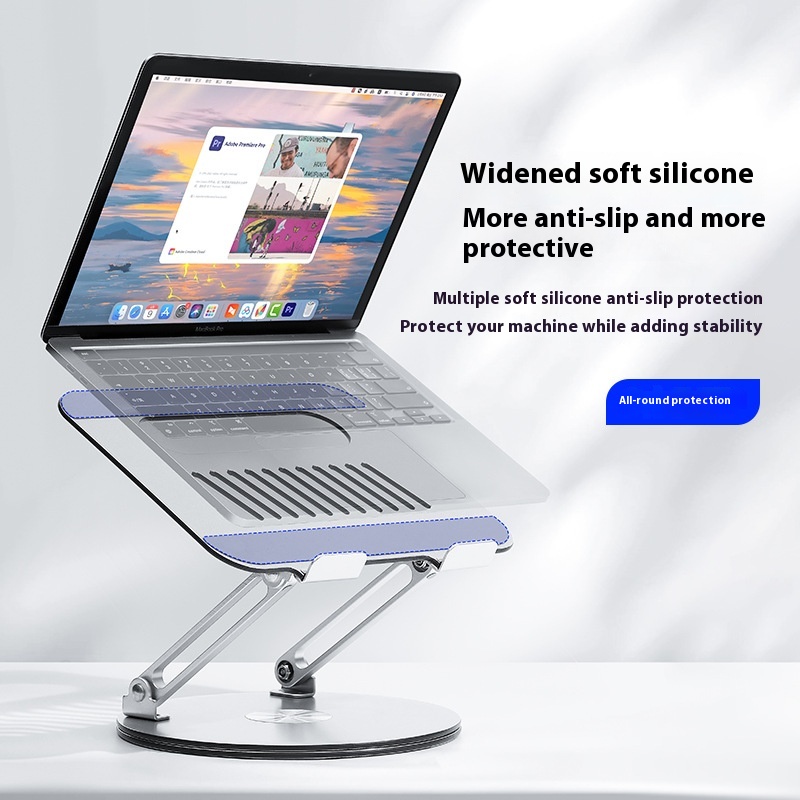
Rise Aluminium Laptop Stand
Rotatable aluminium, lifts screen to eye level
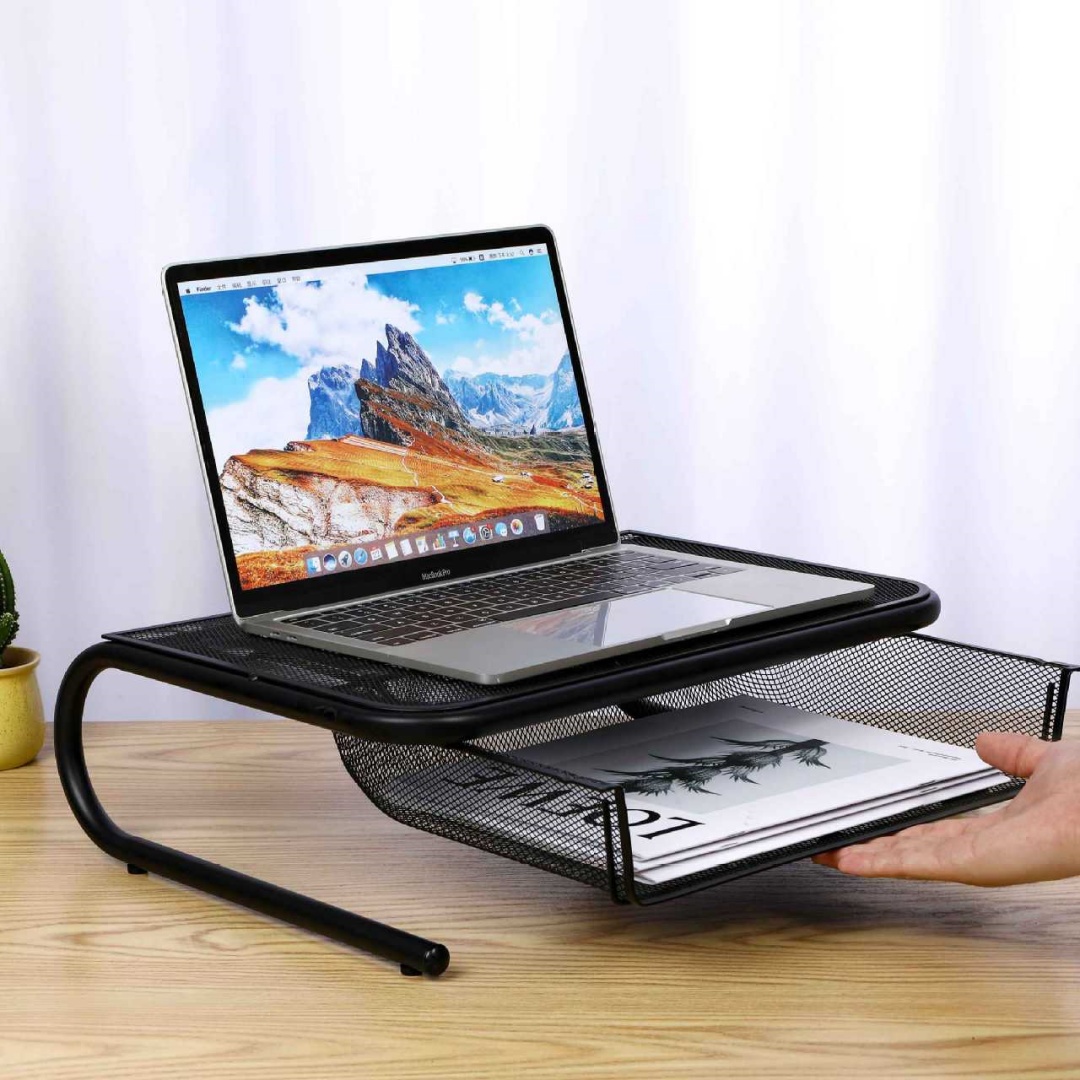
Arch Mesh Monitor Riser
Ventilated steel mesh, budget-friendly lift
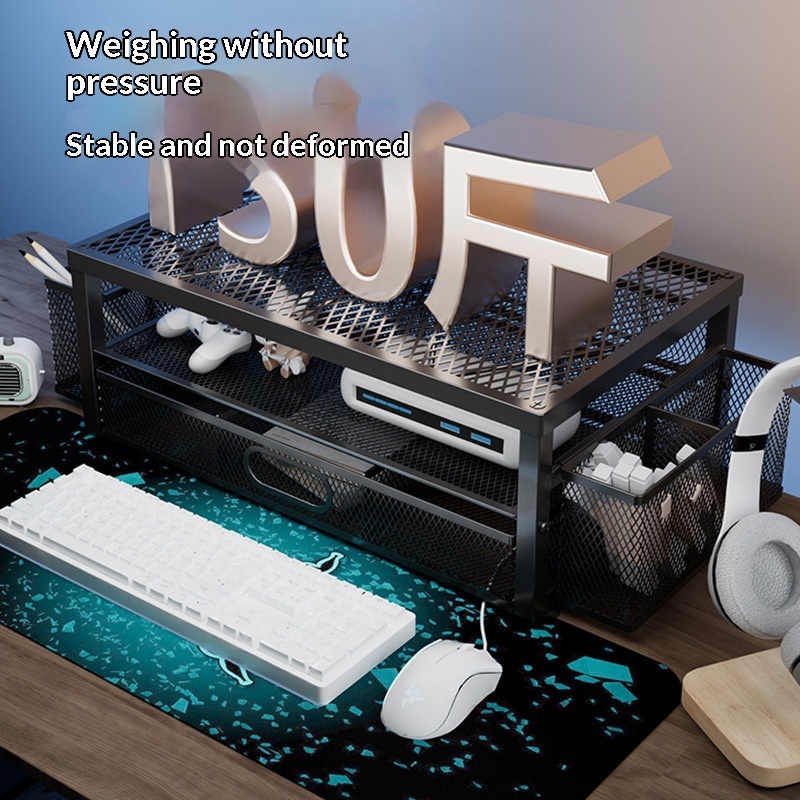
Weave Mesh Monitor Riser
Steel mesh riser with pull-out drawer
A heatwave routine that actually holds
The pattern that works is the one that respects the day's shape. Start earlier than usual and put the demanding work before noon. Keep a large bottle of water at the desk so drinking does not depend on remembering. Ventilate the room before the outside air heats up, then keep sun out with blinds or curtains; a room kept closed and shaded during the day stays several degrees cooler than one fighting direct sun. Take the EU-OSHA advice on pace seriously: schedule lighter tasks, calls and admin for the hottest hours. And end the workday on time, because sleep in a hot bedroom is already fragile enough without late screen time.
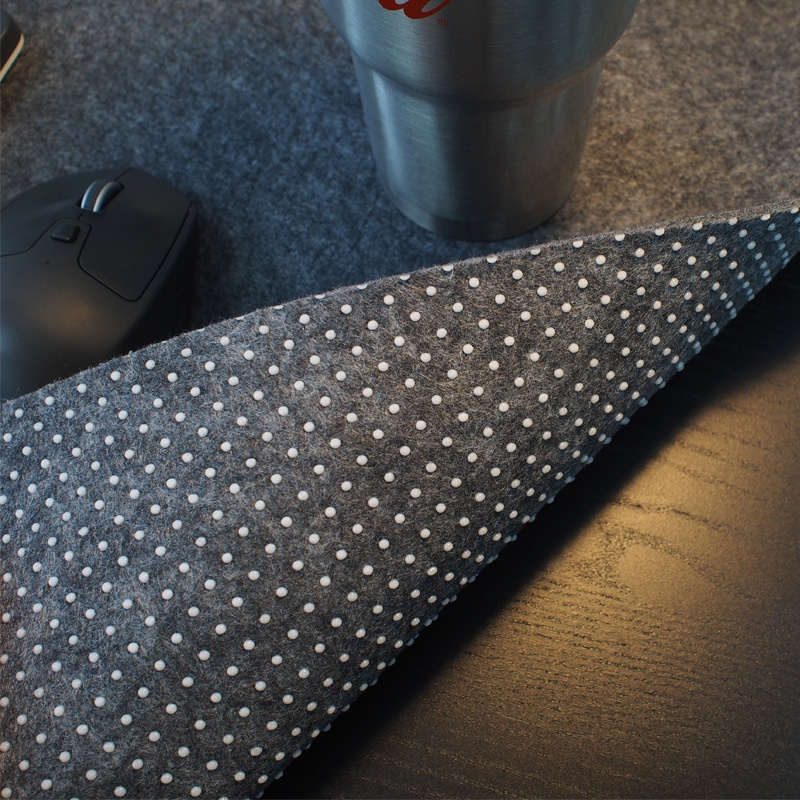
Field Felt Desk Pad
Extended felt pad for keyboard and mouse
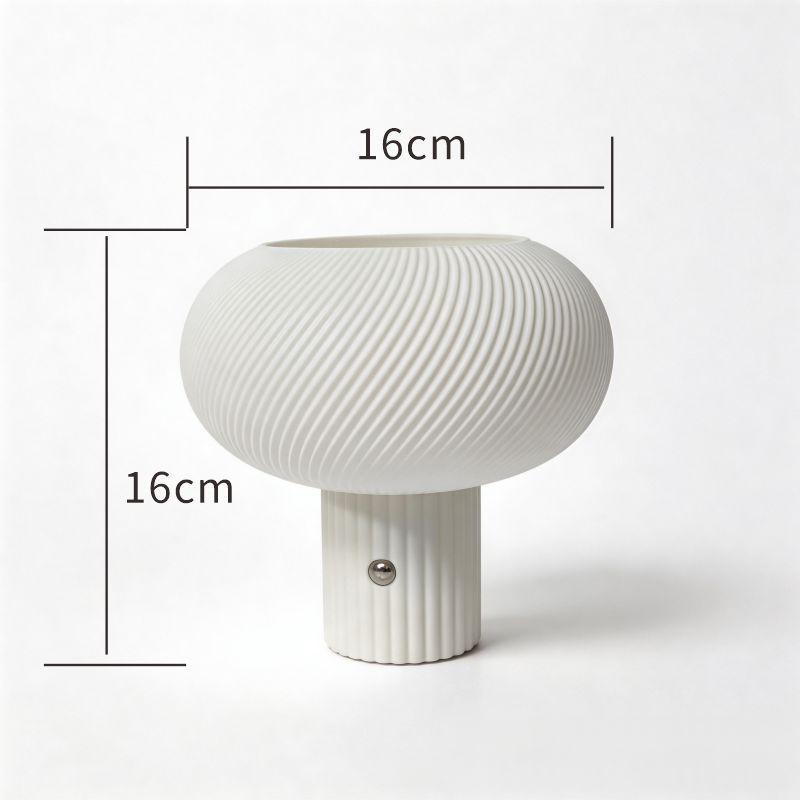
Nest Charging Desk Lamp
Dimmable eye-care light + charging nest
FAQ
Is there a legal maximum temperature for working from home?
No. EU law requires workplace temperatures to be adequate for human beings and obliges employers to assess risks, including heat, but sets no single numeric maximum. Some member states publish national guideline values, so it is worth checking your country's rules.
Does my employer have duties for my home office in a heatwave?
Employers' general duty to assess and manage working-condition risks extends to structural telework in many member states. In practice that usually means guidance and flexibility, such as shifted hours, rather than physical measures in your home.
What are early signs of heat stress to watch for?
EU-OSHA lists headache, dizziness, muscle cramps and unusual fatigue among the early warning signs. Taking a break in a cooler room and drinking water are the immediate responses; symptoms that do not settle deserve medical attention. This is general guidance, not medical advice.
Sources
- EU-OSHA · Heat at work: preventing illness and protecting workers
- EU-OSHA / OSHwiki · Heat at work: guidance for workplaces
- EU-OSHA / OSHwiki · Practical tips to make home-based telework healthy, safe and effective
- Eurostat · Employed persons working from home by professional status (lfsa_ehomp)