Is Sitting the New Smoking? What the Research Actually Says About the Decade's Most Viral Desk-Health Claim
11 August 2026 · Workplace health
The slogan has been circulating since at least 2012 and still shows up in headlines today. In 2018, researchers answered it in a peer-reviewed paper with the question in its title. A calm look at what the sitting evidence really shows, why the smoking comparison fails the arithmetic, and what a desk worker should actually change.
A slogan that outgrew its evidence
Few health slogans have travelled further than 'sitting is the new smoking'. It has been in circulation since at least January 2012, when a CBS station in Minnesota attached it to Mayo Clinic researcher Dr James Levine, the scientist most often credited with popularising it. A year later, Nilofer Merchant told Harvard Business Review readers that sitting is 'the smoking of our generation', and her TED talk on walking meetings carried the idea into boardrooms worldwide. The phrase has remarkable staying power: as recently as May 2026, a US public-radio piece on movement breaks opened with 'We have all heard that sitting is the new smoking.' It is catchy, memorable and built on a real concern. It is also, by the numbers, wrong, and the research community has said so in unusually plain language. In 2018 a group of sedentary-behaviour and epidemiology researchers examined the comparison in the American Journal of Public Health, in a paper with the question in its title. This article walks through what they found, what the sitting research genuinely shows, and what a desk worker should do with the answer.
The kernel of truth: prolonged sitting is a real, measured risk
Start with what the slogan gets right: prolonged sitting is a legitimate, well-documented health concern. The meta-analysis cited by the American Journal of Public Health authors reported a hazard ratio of 1.22 for the association between high levels of sedentary behaviour and all-cause mortality, in plain terms roughly a 20 to 25 percent higher risk of death from any cause. The largest single dataset is the 2016 harmonised meta-analysis in The Lancet, which pooled data from 1,005,791 men and women followed for 2 to 18.1 years, during which 84,609 died, and found long daily sitting associated with increased mortality, concentrated among people who were also physically inactive. The World Health Organization has translated this into formal guidance: its 2020 physical-activity guidelines include a strong recommendation that adults should limit the amount of time spent being sedentary. None of the researchers who push back against the smoking comparison dispute any of this. The question the slogan raises is not whether sitting matters, but whether it belongs in the same sentence as cigarettes.
Why the smoking comparison fails the arithmetic
The 2018 paper put the two exposures side by side, and the gap is not subtle. Current smokers face a relative risk of death from all causes of 2.80 for men and 2.76 for women compared with people who have never smoked; for heavy smokers, above 40 cigarettes a day, it rises to 4.08 and 4.41. High sitting, from the meta-analysis above, carries a hazard ratio of 1.22. The authors compress the contrast into a single sentence: 'any level of smoking increases risk of dying from any cause by approximately 180% versus a 25% risk increase for sitting.' The absolute scale differs just as sharply: the WHO's tobacco fact sheet counts more than 7 million deaths a year from tobacco, including over 1.6 million non-smokers exposed to second-hand smoke. The paper's conclusion is unusually direct for an academic journal: 'equating sitting with smoking is unwarranted, misleading for the public, and may serve to distort and trivialize the ongoing and serious risks of smoking.' Its closing line answers the title question in one word: no.
The difference that matters at a desk: sitting risk responds to movement
There is a second reason the analogy misleads, and it is the more useful one for anyone with a desk job: there is no known dose of exercise that compensates for smoking, but the risk attached to sitting responds clearly to movement. The 2016 Lancet analysis found that high levels of moderate-intensity physical activity, about 60 to 75 minutes a day, seemed to eliminate the increased risk of death associated with high sitting time (it attenuated, but did not remove, the risk associated with high TV time). A 2020 follow-up in the British Journal of Sports Medicine, using accelerometer measurements from 44,370 people rather than self-reports, found that roughly 30 to 40 minutes of moderate-to-vigorous activity a day attenuated the association between sedentary time and mortality. And the WHO's guidance stresses that the trade does not require a gym: replacing sedentary time with physical activity of any intensity, including light intensity, provides health benefits, with a further recommendation that people who sit a great deal aim above the standard activity targets. A brisk daily walk sits comfortably inside those numbers.
What that means for Europe's desk workers
For European desk workers the exposure is the norm, not the exception. EU-OSHA's report on prolonged static sitting notes that, according to Eurostat data from 2017, 39 percent of EU workers carry out their work sitting down, and that in the 2015 European Working Conditions Survey 28 percent of workers reported sitting almost all of the time, with another 30 percent sitting between a quarter and three-quarters of it. The same report defines prolonged sitting as two hours or more at a stretch and turns the evidence into unusually concrete rules of thumb: aim to get up at least every 20 to 30 minutes, always get up for at least 10 minutes after two hours of sitting, keep total sitting at work under five hours a day and under half of the working day, and alternate between sitting, standing and walking rather than treating any single posture as the goal. Measured against those numbers, the average office day has more room for improvement than most setups acknowledge.
Where equipment honestly fits, and where it does not
Equipment plays a supporting role in that picture, and it is worth being precise about which one. The Cochrane review of workplace interventions found that sit-stand desks reduced workplace sitting by on average 100 minutes per workday at short-term follow-up, the clearest effect in the review, but graded the evidence low quality: helpful, not proven transformative. The rest of a setup earns its keep by lowering the friction of changing position. A monitor arm lets you re-set screen height in seconds when you switch posture, instead of stacking books; a laptop stand plus a separate keyboard makes it trivial to rebuild your workstation at a kitchen counter or a standing shelf for an hour. None of it moves for you, and nothing on this page treats or prevents any condition. But the pattern the evidence supports, frequent small position changes plus a daily dose of genuine movement, is far easier to keep up when your desk does not fight it.
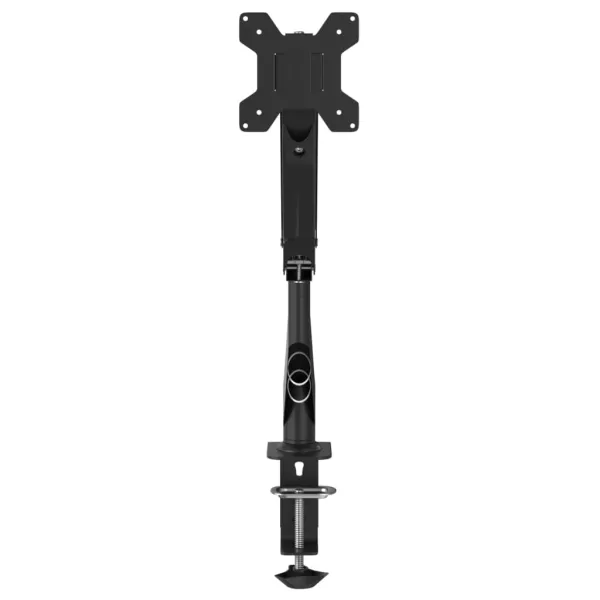
Crane Gas-Spring Monitor Arm
Gas-spring single arm, up to 27", 10 kg
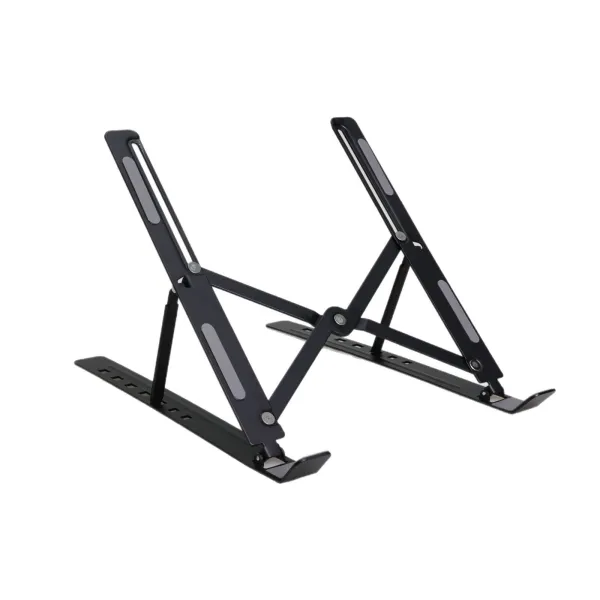
Wing Folding Laptop Stand
7 angles, folds flat, 230 g

Rise Aluminium Laptop Stand
Rotatable aluminium, lifts screen to eye level
FAQ
Is sitting really the new smoking?
No. The peer-reviewed paper that examined the comparison directly (American Journal of Public Health, 2018) put the numbers side by side: any level of smoking raises the risk of death from any cause by approximately 180 percent, while high sitting is associated with roughly a 25 percent increase. The authors called equating the two 'unwarranted' and 'misleading'. That said, prolonged sitting is still a genuine, well-documented health risk worth managing. General information, not medical advice.
How much exercise offsets a day of sitting?
The 2016 Lancet harmonised meta-analysis of more than one million adults found that about 60 to 75 minutes of moderate-intensity activity a day seemed to eliminate the extra mortality risk associated with high sitting time. A 2020 accelerometer-based follow-up in the British Journal of Sports Medicine put the dose that attenuated the association at roughly 30 to 40 minutes of moderate-to-vigorous activity a day. The WHO adds that replacing sitting with activity of any intensity, including light activity, provides health benefits. General information, not medical advice.
Do standing desks solve the problem?
They help with one part of it. A Cochrane review found sit-stand desks reduce workplace sitting by on average 100 minutes per workday in the short term, but rated the evidence low quality. EU-OSHA's practical advice is to alternate sitting, standing and walking, to get up at least every 20 to 30 minutes, and to keep total sitting at work under five hours a day. Equipment that makes position changes easy supports that pattern; it does not add the movement for you.
Sources
- Vallance et al. · Evaluating the Evidence on Sitting, Smoking, and Health: Is Sitting Really the New Smoking? (American Journal of Public Health, 2018)
- Ekelund et al. · Does physical activity attenuate, or even eliminate, the detrimental association of sitting time with mortality? A harmonised meta-analysis (The Lancet, 2016)
- Ekelund et al. · Joint associations of accelerometer-measured physical activity and sedentary time with all-cause mortality (British Journal of Sports Medicine, 2020)
- WHO · Tobacco fact sheet
- WHO · Guidelines on physical activity and sedentary behaviour (2020)
- EU-OSHA · Prolonged static sitting at work: health effects and good practice advice
- Shrestha et al. · Workplace interventions for reducing sitting at work (Cochrane review, plain-language summary)
- CBS News Minnesota · MN Researcher: Sitting Is 'The New Smoking' (2012)
- Merchant · Sitting Is the Smoking of Our Generation (Harvard Business Review, 2013)
- WUSF · 'Sitting is the new smoking': Short movement breaks can offset damage (2026)