What Desk-Equipment Certifications Actually Mean: CE, Flicker-Free, EPREL, EN 1335 and VESA
30 July 2026 · Buying guides
Desk-equipment listings are dense with labels that range from legally meaningful to pure decoration. A calm guide to which is which — the CE mark, flicker claims, the EPREL energy label, furniture standards and VESA mounting: and how to check each one yourself.
Start with the CE mark — and what it does not tell you
Nearly every powered product sold in the EU carries the CE mark, and it is the most misread label of them all. According to the European Commission, by affixing the CE marking a manufacturer declares that the product meets all the legal requirements for it: and, crucially, the mark does not indicate that a product has been approved as safe by the EU or by any other authority. It is a self-declaration of legal conformity, not a quality tier and not evidence of third-party testing. That makes it the wrong place to anchor a buying decision and the right place to start reading more carefully. The labels actually worth your attention involve measurement: regulated performance limits, public registries you can search, and voluntary certifications issued by a named test body. The rest of this article decodes the four families you will meet most often on desk-equipment pages: flicker claims, the energy label, furniture standards and mounting compatibility.
Flicker-free: a legal floor since 2021, and a voluntary badge above it
The phrase 'flicker-free' on a lamp or monitor listing can mean a great deal or nothing at all. Since 1 September 2021, Commission Regulation (EU) 2019/2020: the ecodesign rules for light sources: has set functional limits for mains-powered LED light sources: short-term flicker, measured as PstLM, may not exceed 1.0, and since 1 September 2024 the stroboscopic-effect metric SVM is capped at 0.4. A compliant LED lamp sold in the EU therefore already meets a measurable floor. Above that floor sits voluntary certification: TÜV Rheinland's Flicker-Free mark, best known from monitors, involves third-party testing of a display's flicker behaviour: including at different brightness levels, which matters because dimming is where flicker tends to creep in: and certified products are listed in TÜV Rheinland's public Certipedia register, so the claim can be looked up. The practical reading order: EU compliance is the baseline, a named certification you can verify is stronger evidence, and an unexplained 'flicker-free' bullet point is marketing until sourced.
EPREL: the QR code that opens the lamp's own file
Since the EU energy label for light sources was rescaled on 1 September 2021, labels run from A to G: the old A+ and A++ classes were retired because most products had drifted to the top of the scale: and each new label carries a QR code. That code resolves to the product's entry in EPREL, the European Product Registry for Energy Labelling, where every light source in scope must be registered before it can be placed on the EU market. The entry lists characteristics such as luminous flux, colour temperature and energy class, as declared to regulators rather than written for shoppers. Two habits follow. First, do not compare an old A++ rating with a new letter: the scales are different by design. Second, if a product listing's specification contradicts its own EPREL entry, believe the register: it is the version of the truth the supplier is legally accountable for.
Desks and chairs: EN 527, EN 1335 and BIFMA X5.1
Furniture has its own standards family, mostly invisible to shoppers but citable whenever a product page names them. EN 527-1:2011 specifies the dimensions of office work tables and desks used in a seated, sit-stand or standing position, and its companion EN 527-2 covers safety, strength and durability requirements. For seating, EN 1335-2:2018 sets the European safety requirements for office work chairs, built around use of up to eight hours a day by a person weighing up to 110 kg. The North-American counterpart, ANSI/BIFMA X5.1, puts general-purpose office chairs through a battery of around twenty tests: repeated loads on the seat, backrest, arms and base that simulate years of regular use. A standard named on a listing does not guarantee the individual unit on your desk, but a manufacturer that cites a testable standard is making a falsifiable claim, which is precisely what separates a specification from a slogan.
VESA: the quiet standard that makes monitor arms interchangeable
The most useful standard on a desk-equipment page is also the least glamorous. VESA's Flat Display Mounting Interface (FDMI) defines the screw-hole patterns that let any compliant monitor attach to any compliant arm, stand or wall mount. For ordinary desktop monitors the common patterns are 75 × 75 mm and 100 × 100 mm: four holes arranged in a square on the back of the panel. Two checks before buying an arm: confirm your monitor actually has VESA holes, since some slim or curved consumer panels omit them or need an adapter plate, and match the arm's stated weight and screen-size rating to your display: a gas-spring arm is specified for a range, not just a maximum, and a screen that is too light can be as fiddly as one that is too heavy. Because the interface is standardised, a decent arm outlives any single monitor: buy once, remount for years.
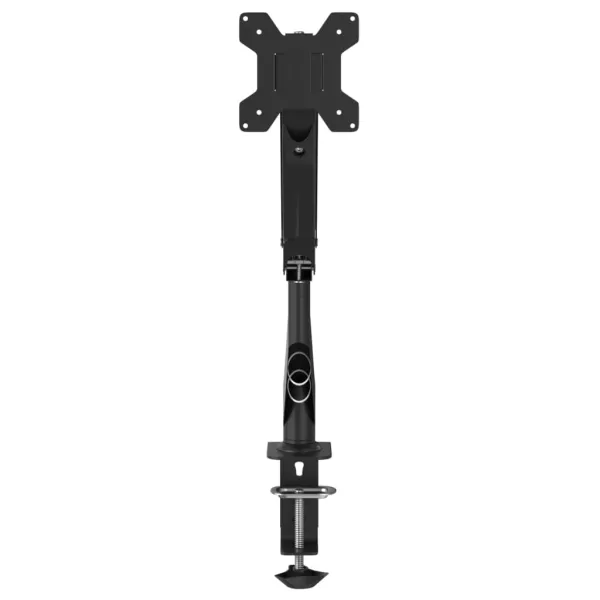
Crane Gas-Spring Monitor Arm
Gas-spring single arm, up to 27", 10 kg
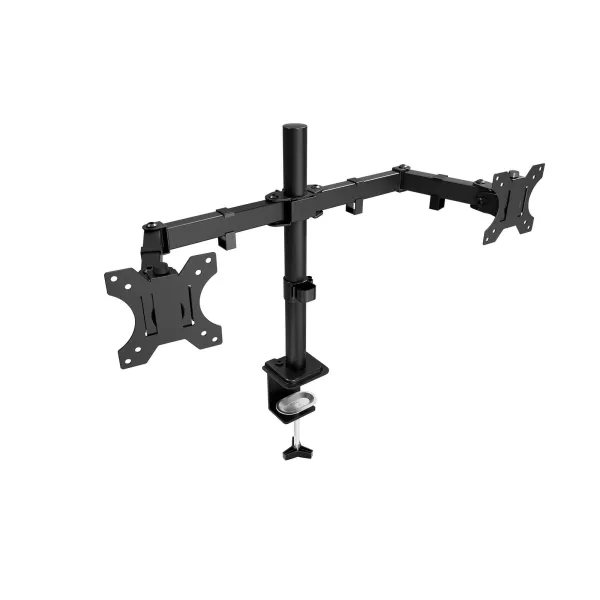
Tandem Dual Monitor Arm
Two adjustable arms on one desk clamp
A sixty-second label audit for any product page
Pulled together, this becomes a quick routine rather than a research project. Treat the CE mark as table stakes, never as proof of quality. On lighting, prefer specific, checkable claims: a named certification you can find in Certipedia, or an EPREL entry you can open from the label's QR code: over an adjective. On furniture, a cited standard such as EN 1335 or BIFMA X5.1 signals a manufacturer that expects to be tested; its absence is not damning on budget items, but then the load rating, the materials and the warranty have to carry the weight of the promise. On anything that holds a screen, verify the VESA pattern and the weight range. And for the many categories where no certification regime exists at all: laptop stands, risers, wrist rests: judge the measurable specification and the seller's warranty and returns terms instead. Labels are not a substitute for judgement; they are a way to aim it.
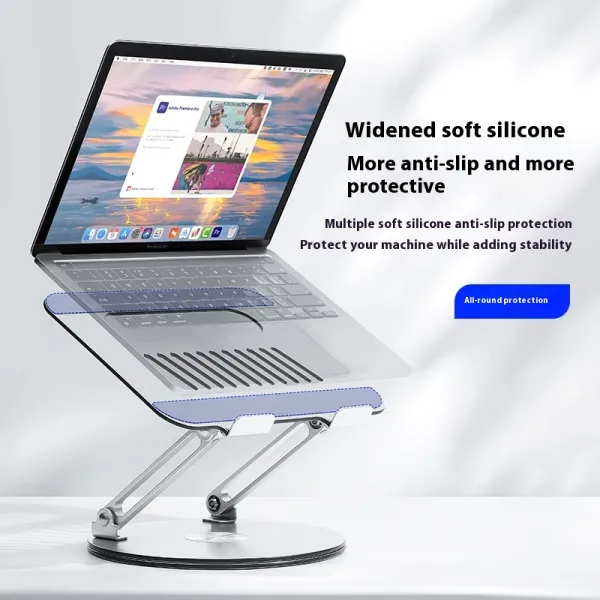
Rise Aluminium Laptop Stand
Rotatable aluminium, lifts screen to eye level
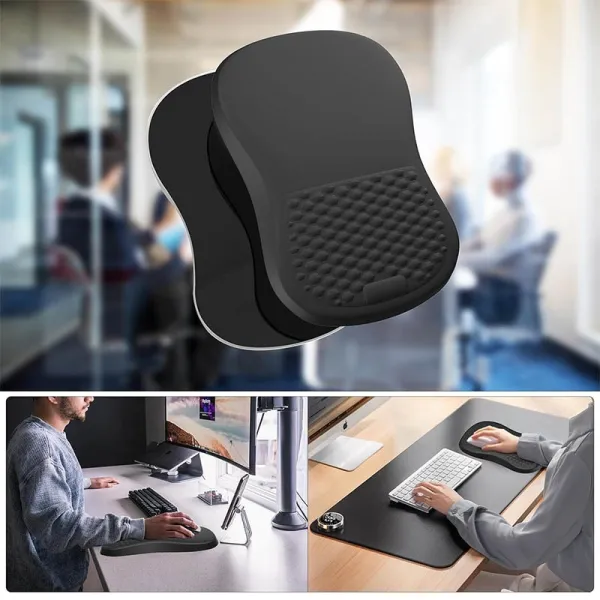
Cushion Wrist-Support Mouse Pad
Memory-foam wrist support, non-slip base
FAQ
Is the CE mark a quality certification?
No. The CE mark is the manufacturer's own declaration that the product meets the EU legal requirements that apply to it: the European Commission notes it does not mean the product has been approved as safe by the EU or any other authority. Treat it as a legal baseline and look for measurable specifications or named third-party certifications on top.
Does 'flicker-free' on a lamp or monitor mean it was independently tested?
Not by itself. EU ecodesign rules already cap flicker (PstLM no higher than 1.0 since September 2021) and the stroboscopic effect (SVM no higher than 0.4 since September 2024) for mains-powered LED light sources, so a compliant lamp meets a legal floor. Independent testing is only implied when a named certification such as TÜV Rheinland Flicker-Free is cited: and those certificates can be verified in the public Certipedia database.
What VESA size do I need for a monitor arm?
Most desktop monitors use a 75 × 75 mm or 100 × 100 mm VESA hole pattern, and most arms ship with a plate that fits both. Check the back of your monitor or its manual for the pattern, then match the arm's weight and screen-size rating to your display; some slim or curved panels need an adapter plate.
Sources
- European Commission · CE marking
- Commission Regulation (EU) 2019/2020 · ecodesign requirements for light sources (EUR-Lex)
- TÜV Rheinland Certipedia · Flicker Free certified products
- European Commission · Light sources: energy label and EPREL registration
- EN 527-1:2011 · Office furniture: work tables and desks, dimensions (iTeh Standards)
- EN 1335-2:2018 · Office work chair safety requirements (iTeh Standards)
- ANSI/BIFMA X5.1 · General-purpose office chairs: tests (Micom Laboratories)
- VESA Flat Display Mounting Interface (FDMI) · overview (Wikipedia)