The Cost of Poor Desk Ergonomics: What the Official Numbers Actually Measure
18 August 2026 · Workplace health
Ergonomics is usually argued in terms of comfort. Europe's safety agencies argue it in euros and working days. A calm read of what EU-OSHA, Britain's HSE and the ISSA return-on-prevention study actually measured, what those figures do and do not prove, and where a single home desk fits into them.
The number that frames everything: 3.3 % of EU GDP
The headline figure in this field comes from a joint project by the International Labour Organization, the Finnish Ministry of Social Affairs and Health, the Finnish Institute of Occupational Health, the WSH Institute in Singapore, the International Commission on Occupational Health and EU-OSHA, presented at the XXI World Congress on Safety and Health at Work in Singapore in September 2017. Its conclusion: work-related ill health and injury costs the European Union 3.3 % of its GDP, or roughly EUR 476 billion every year, against 3.9 % of GDP and some EUR 2,680 billion worldwide. Work-related cancer is the single largest contributor in most European countries at EUR 119.5 billion, with musculoskeletal disorders the second largest. Three caveats belong with that number rather than in a footnote. It dates from 2017 and remains EU-OSHA's headline estimate, so it is a stable reference rather than a fresh one. It covers all work, from scaffolding to spreadsheets, not desk work alone. And the uncertainty is wide: a later bottom-up modelling exercise summarised on EU-OSHA's OSHwiki put the economic burden at anywhere from 2.9 % of GDP in Finland to 10.2 % in Poland, depending on the country and the method. What official data can honestly offer is direction and rough magnitude, never a euro figure for your particular desk.
Musculoskeletal disorders: the desk worker's share of the bill
EU-OSHA's report on the prevalence, costs and demographics of work-related musculoskeletal disorders sets out the scale in plain terms. Roughly three out of every five workers in the EU-28 report MSD complaints, with backache and muscular pains in the upper limbs the most commonly named. Of all workers in the EU reporting a work-related health problem, 60 % identify MSDs as their most serious issue. One in five people in the EU-28 suffered a chronic back or neck disorder in the past year. In burden-of-disease terms, MSDs account for 15 % of all disability-adjusted life years lost to work-related injuries and illness. None of that is a desk-work statistic: construction, transport and storage, and caring occupations all carry higher MSD rates than office work. But the risk pattern the report names is not exclusive to heavy industry. Fixed or constrained body positions, continual repetition of movements, force concentrated on small parts of the body such as the hand or wrist, and a pace of work that does not allow sufficient recovery between movements describe a keyboard-and-mouse day as accurately as they describe a warehouse shift.
Absence is the part that gets counted
Cost estimates are modelled; absence is measured, which makes it the firmest ground in the whole discussion. EU-OSHA's MSD report found that in 2015 more than half (53 %) of workers with MSDs, including those with other health problems, reported being absent from work during the past year, against 32 % of workers without health problems. They are also absent for longer: 26 % of workers with chronic MSDs and other health problems reported more than eight days of absence, against 7 % of workers with no health problems. Britain's Health and Safety Executive publishes the tightest annual series in Europe, and its 2025 release covering 2024/25 gives the granular version. An estimated 511,000 workers suffered work-related musculoskeletal disorders, a prevalence rate of 1,470 per 100,000 workers, of which 173,000 were new cases. Those disorders cost 7.1 million working days, an average of 14 days lost per case, and accounted for 27 % of all work-related ill-health cases and 20 % of all working days lost to work-related ill health. The body-site split is the detail worth a desk worker's attention: 221,000 cases mainly affecting the back, 211,000 the upper limbs or neck, and 78,000 the lower limbs.
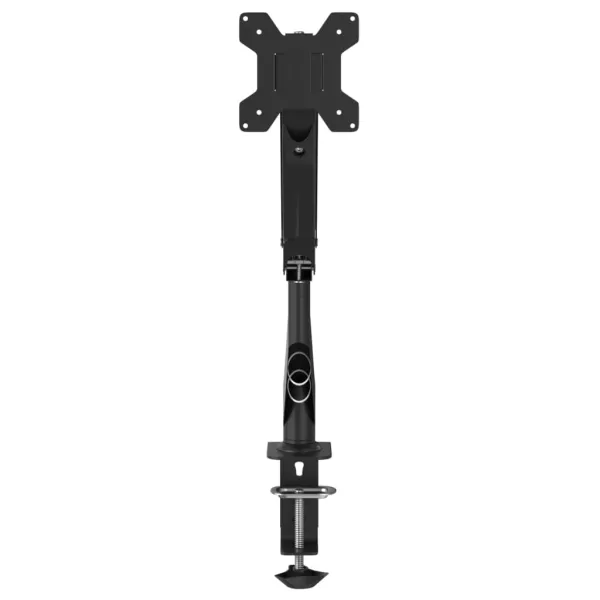
Crane Gas-Spring Monitor Arm
Gas-spring single arm, up to 27", 10 kg
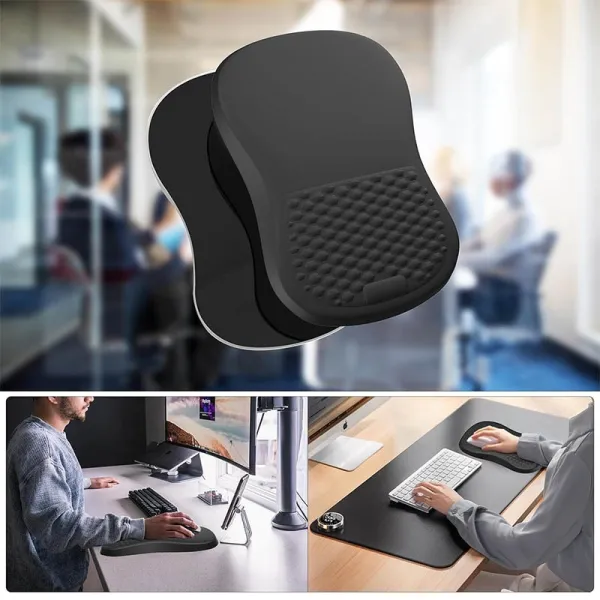
Cushion Wrist-Support Mouse Pad
Memory-foam wrist support, non-slip base
Who actually pays, and why it matters if you work for yourself
The HSE also models where the money lands, and that breakdown is the most quietly useful part of the dataset. Workplace injury and new cases of work-related ill health cost Britain around GBP 22.9 billion in 2023/24: GBP 16.4 billion of it ill health, at a unit cost of about GBP 24,200 per case, and GBP 6.5 billion injury, at about GBP 10,000 per case. The burden divides into GBP 13.4 billion falling on individuals, GBP 5.2 billion on government and GBP 4.3 billion on employers, with the majority landing on individuals because human costs dominate the model. For anyone who is both the employer and the individual, a freelancer, a one-person business, a solo home worker, there is no division at all: every column is the same person. On the national scale the same logic shows up as lost output. EU-OSHA cites German figures in which musculoskeletal and connective-tissue disorders accounted for EUR 17.2 billion of production loss in 2016 and EUR 30.4 billion in lost gross value added, equal to 0.5 % and 1.0 % of German GDP respectively.
The other side of the ledger: what prevention returns
The most-quoted prevention figure comes from a study run by the International Social Security Association with the German Social Accident Insurance and BG ETEM, which interviewed experts (company owners, controllers, safety officers, works council members) at 300 companies across 15 countries. Its result: an average return on prevention of 2.2, meaning that for every euro per employee per year invested in workplace prevention, companies can expect a potential economic return of EUR 2.20. EU-OSHA repeats that ratio in its own business case for good occupational safety and health. The honest reading matters here, because the study says so itself: the figures are assessments and estimates offered by the interviewees and are explicitly not representative for individual companies. A firmer signal sits in EU-OSHA's ESENER data, where the share of workers reporting backaches falls from 51 % in countries and sectors with an average of one to three preventive measures in place to 31 % where five or six measures are in place. That is an association across countries and sectors rather than a before-and-after trial in one office, but it points the same way as the report's clearest finding: interventions based on single measures appear to be less effective, and a combination of actions beats any one fix. One last detail from the same data is directly relevant to home workers. The availability of preventive measures increases with establishment size, which means micro and small enterprises, and by extension anyone working alone at home, sit in the widest gap.
Translating the statistics to one desk
EU-OSHA's OSHwiki article on musculoskeletal disorders and telework is unusually direct about the mechanism behind the numbers: many teleworkers use laptop computers and makeshift home workstations, which result in non-neutral body postures and increased musculoskeletal complaints, while inappropriate location of the screen, keyboard or mouse and a lack of forearm support lead to discomfort. Its recommendations are equally concrete. Position the screen at eye level or just below, using a laptop stand or, failing that, a box or a stack of books, and preferably an external screen of at least 19 inches. When working on a laptop, use an external mouse and keyboard, since that allows a more comfortable posture and prevents strain at the neck and shoulder, and prefer a flat keyboard or one with the feet folded in. Light the room adequately, preferably a minimum of 500 lux, and avoid extreme contrasts such as a bright screen in a dark room. Alternate sitting, no more than an hour at a stretch, with standing, no more than 30 minutes, ideally at a sit-stand desk. Read that list next to the ESENER finding and the point becomes clear: this works as a combination, not as a single purchase, and the two cheapest items on it, a break rhythm and a screen at the right height, cost nothing or nearly nothing. Equipment closes the gaps that furniture and habit cannot. This is general information, not medical advice; persistent pain belongs with a doctor or physiotherapist.
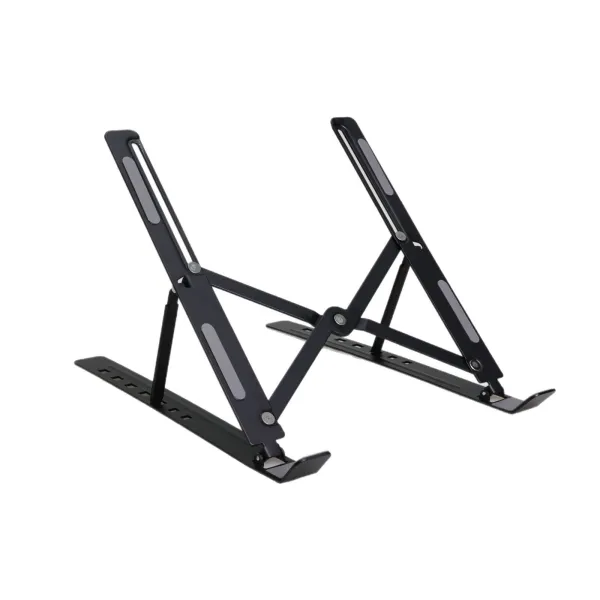
Wing Folding Laptop Stand
7 angles, folds flat, 230 g
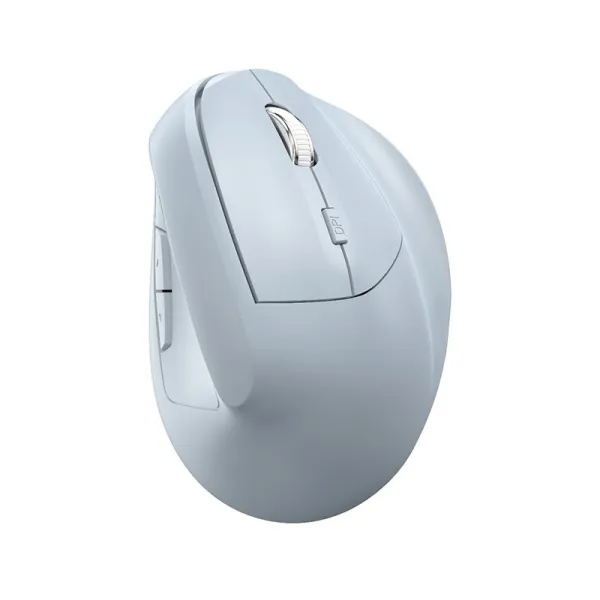
Vertex Wireless Vertical Mouse
Bluetooth vertical mouse, neutral handshake grip
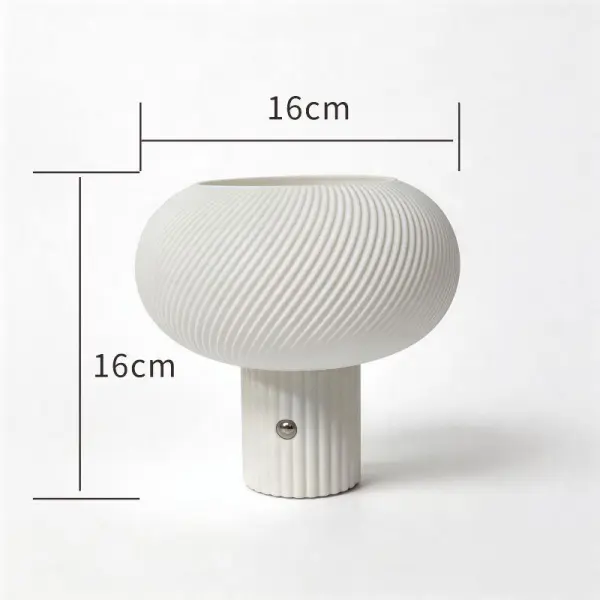
Nest Charging Desk Lamp
Dimmable eye-care light + charging nest
FAQ
What does poor ergonomics actually cost?
No one can price a single desk, and any source that claims to is guessing. What official data gives is the scale: EU-OSHA and the ILO estimate that work-related ill health and injury costs the EU 3.3 % of GDP, about EUR 476 billion a year (2017 estimates, covering all work rather than desk work alone), with musculoskeletal disorders the second largest contributor after work-related cancer. In Great Britain, the HSE puts the cost of workplace injury and new cases of work-related ill health at around GBP 22.9 billion in 2023/24, of which GBP 13.4 billion falls on individuals rather than on employers or government.
How many working days are lost to musculoskeletal disorders?
In Great Britain in 2024/25, the HSE estimated 511,000 workers with work-related musculoskeletal disorders and 7.1 million working days lost, an average of 14 days per case. That was 27 % of all work-related ill-health cases and 20 % of all working days lost to work-related ill health. Across the EU, EU-OSHA found that 53 % of workers with MSDs reported an absence in the past year against 32 % of workers without health problems, and that they stay away longer when they do.
Is ergonomic equipment worth the money?
The most-cited figure is a return on prevention of 2.2, meaning about EUR 2.20 returned per euro per employee per year invested in workplace prevention, from an ISSA study of 300 companies in 15 countries. Treat it as an indication rather than a guarantee: the study is built on interviewees' own cost and benefit assessments and states that it is not representative for individual companies. The more useful finding for one desk is that combinations work better than single purchases, and that the free measures, a screen at eye level and a break rhythm, come first.
Sources
- EU-OSHA · An international comparison of the cost of work-related accidents and illnesses (2017)
- EU-OSHA · Good OSH is good for business (3.3 % of EU GDP; return of 2.2 euros per euro invested)
- EU-OSHA · Work-related MSDs: prevalence, costs and demographics in the EU (executive summary)
- EU-OSHA OSHwiki · The value of OSH: estimating the societal costs of work-related injuries and diseases
- HSE · Work-related musculoskeletal disorders statistics in Great Britain, 2025
- HSE · Working days lost in Great Britain
- HSE · Costs to Britain of workplace injury and new cases of work-related ill health
- ISSA / DGUV / BG ETEM · The return on prevention: calculating the costs and benefits of investments in occupational safety and health in companies
- EU-OSHA OSHwiki · Musculoskeletal disorders and telework