Right to Disconnect in the EU: Where the Directive Stands in 2026 (Country-by-Country)
6 July 2026 · Workplace health
There is still no EU-wide law on switching off after hours — but a Commission initiative is in motion, and several member states already regulate it, so here is where things actually stand.
No EU-wide directive yet — but the file is moving
As of mid-2026 there is no binding EU-level right to disconnect. The European Parliament asked for one back in January 2021, adopting a resolution (472 votes in favour) that called on the Commission to propose a directive setting minimum standards for switching off outside working hours. The Commission has since opened consultations with employers and trade unions on an initiative to address 'always-on' culture and telework, with a formal proposal and adoption widely expected across 2026-2027 and national transposition to follow. In short: the direction of travel is clear, the timeline is not yet fixed, and nothing is in force at Union level today.
Why the earlier social-partner route stalled
An EU directive is not the only path. In June 2022, European employer bodies and trade unions agreed to negotiate a legally binding framework on telework and the right to disconnect through social dialogue. After more than a year, those negotiations failed to produce an agreement, which is part of why attention has shifted back to a Commission-led legislative proposal. This matters for planning: any harmonised directive would set a Union-wide floor while leaving member states free to legislate stronger protections above it — so national rules will remain the thing that actually binds employers for some time.
France: the reference point since 2017
France remains the clearest national example. The so-called El Khomri law (loi travail) took effect on 1 January 2017 and wrote a 'droit à la déconnexion' into the Labour Code. Companies with more than 50 employees must address it in their annual workplace negotiations; where no agreement is reached, the employer issues a charter setting out when staff are not expected to be reachable on email, phone or laptop. Notably, the law introduces the right without rigidly defining it, leaving each organisation to set practical arrangements suited to its shifts, clients and time zones.
The wider country picture: a patchwork, not a bloc
Beyond France, several member states already have rules of varying strength. Italy addressed disconnection within its 2017 'smart working' framework; Belgium and Portugal have both legislated protections in recent years, and Ireland introduced a statutory code of practice giving employees a right to disconnect. Outside the EU, Australia brought in a right-to-disconnect provision in 2024. The practical takeaway for cross-border employers is that obligations differ by country, so a single company-wide switch-off policy is a sensible baseline while the EU rules are settled.
Switching off is easier when the workspace can be switched off too
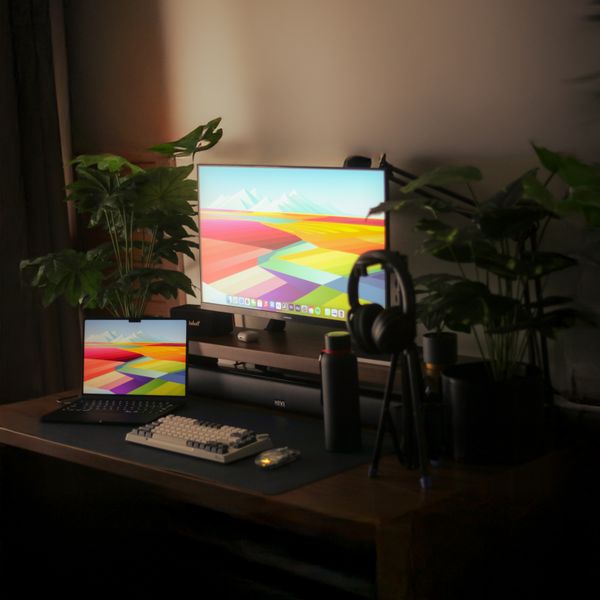
Policy sets the expectation; the room decides whether people actually comply. A home office that never physically 'closes' keeps signalling availability long after hours. The simplest fix is a defined light source you turn off deliberately at the end of the day — a dedicated task or monitor light rather than the overhead ceiling lamp — so darkening the desk becomes the end-of-day ritual. A warm, low-glare bar light supports this better than a bright, always-on ceiling fixture. This is general workspace guidance rather than medical advice; if after-hours strain is affecting your health, speak to a qualified professional.

Focus Desk Lamp
Dimmable, warm to cool

Curve Monitor Light Bar
Bends to curved ultrawide screens

Aura LED Task Lamp
Compact, touch dimmer
Make the desk closable: tidy cables and a docking routine
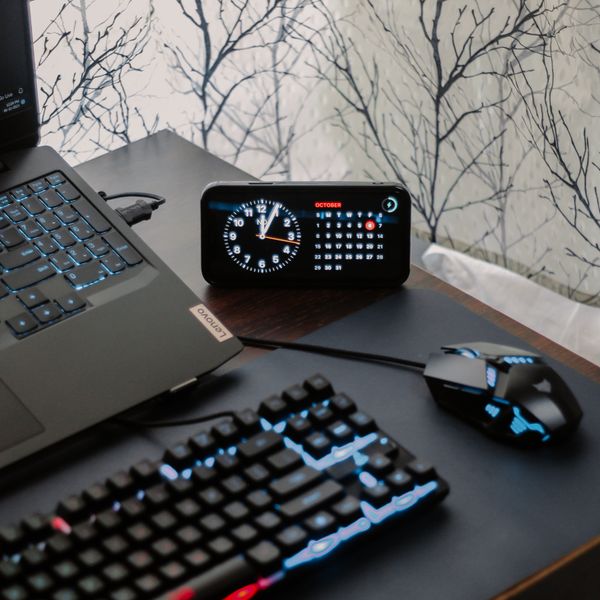
The second half of a 'closable' office is tidying the trailing hardware. When the laptop lives on a permanent tangle of cables, packing it away — the clearest possible signal that work has ended — feels like too much effort, so it never happens. A single dock or cable channel turns disconnection into one clean motion: unplug once, close the lid, done. Investing ten minutes in cable management does more for after-hours boundaries than most policies, because it removes the friction that keeps people logged in.
Relay USB-C Docking Arm
Built-in USB-C dock base

Spine Vertical Cable Manager
Bundles cables desk to floor
Clip Cable Management Kit
Clips, sleeves & ties
FAQ
Is there an EU right to disconnect law in 2026?
Not yet. There is no binding EU-wide directive in force. The European Parliament called for one in 2021 and the European Commission is consulting on a proposal, with adoption widely expected in the 2026-2027 window and national transposition afterwards. Until then, only national laws in individual member states legally bind employers.
Which EU countries already have a right to disconnect?
France is the best-known example, in force since 1 January 2017. Italy addressed it within its 2017 smart-working law, and Belgium, Portugal and Ireland have introduced protections in more recent years. The rules differ in scope and strength from country to country, so it is not a single harmonised standard.
What can employers do before the directive arrives?
Set a clear internal policy now rather than waiting. Define core hours, agree when staff are not expected to respond, and — just as importantly — make it physically easy to switch off by improving home-office setups with a light people turn off at day's end and cable management that makes packing away effortless.
Sources
- The right to disconnect — European Parliament Legislative Train Schedule
- 'Right to disconnect' should be an EU-wide fundamental right, MEPs say — European Parliament
- Right to disconnect — Wikipedia
- France: Right to Disconnect Takes Effect — Library of Congress
- Calling Time on 24/7 Work Connectivity — Social Europe