The European Hybrid Week in 2026: What Hybrid Work Statistics Actually Mean for Your Desk
10 July 2026 · Trends
Fresh tracker data shows Europeans average well under two office days a week, clustered on Tuesday and Wednesday — which quietly makes the home desk the main workstation, not the backup.
The 2026 numbers, in plain figures
deskbird's desk-sharing data for 2026 puts average office attendance at about 1.58 days per week in Zurich, 1.56 in Vienna and 1.31 across Germany — measured from real booking data rather than policy documents. In parallel, the ifo Institute and Stanford's Global Survey of Working Arrangements finds German graduates working from home around 1.6 days a week, above the global average of about 1.2, with Finland among the European leaders near 1.7. The two datasets measure different things (desk bookings versus self-reported home days), but they point the same way: for most European knowledge workers, the office is now a part-time destination. Treat these as a dated snapshot; we refresh them as new tracker releases land.
The quiet implication: home is the primary workstation
If the office sees you roughly 1.3 to 1.6 days a week, then you are working from home the other three to three-and-a-half days. That inverts the old assumption that the corporate desk is 'proper' and the home desk is a stopgap. In practice your home setup now carries the majority of your working hours, so it is the one that should be built to a real ergonomic standard — a stable sit-stand base, a monitor at eye level and a chair rated for full days, not a kitchen chair borrowed for the afternoon. This is general ergonomic guidance rather than medical advice; if you have specific pain or a health condition, check with a qualified professional.

Apex Electric Standing Desk
Dual-motor, memory presets

Arc Single Monitor Arm
Gas-spring, full motion

ErgoPro Mesh Office Chair
Breathable mesh, full adjust
Tuesday and Wednesday: the commute-day setup
The midweek peak is unambiguous: in Germany and across tracked cities like Zurich, Vienna and Paris, Tuesday and Wednesday are consistently the busiest office days, running close to full capacity. Those are the days you carry a laptop between two desks, so the friction worth removing is the daily plug-and-unplug. A single docking connection that restores your monitor, keyboard, power and peripherals in one cable turns the Tuesday-morning reconnect from a chore into a two-second click.
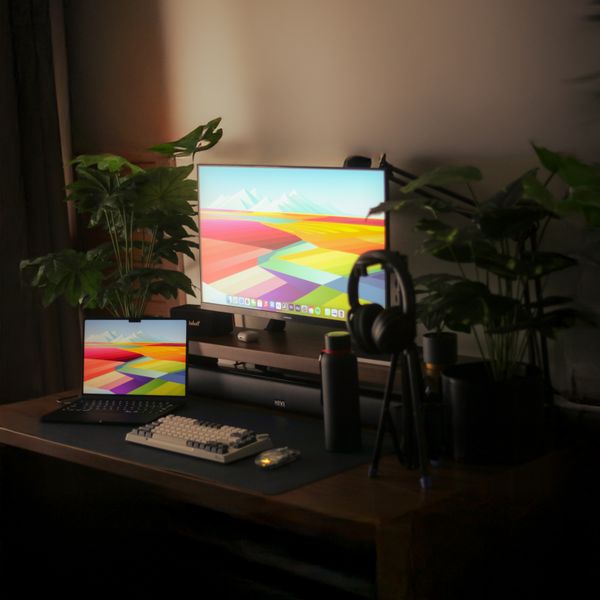
Relay USB-C Docking Arm
Built-in USB-C dock base
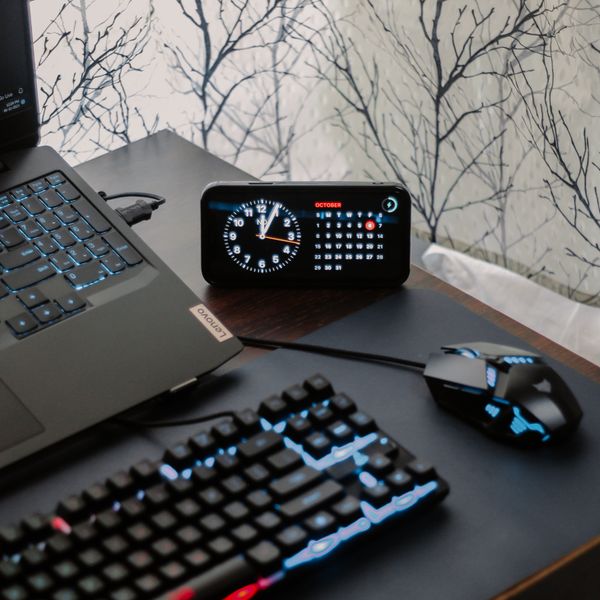
Port 8-in-1 USB-C Dock
One cable, every port
Switch 2-Port USB-C KVM
Two laptops, one keyboard
The quiet Friday: built for deep work at home
Friday has become the quietest office day across the tracked cities — it is, in effect, a near-guaranteed home day for most hybrid teams. That makes it the most predictable deep-work slot of the week, and worth optimising for focus rather than calls: good task lighting for shorter winter afternoons, a clear line of sight to the screen, and a posture you can hold for a long uninterrupted stretch. If your home ceiling light is the only source, a screen-mounted bar removes glare without eating desk space.

Curve Monitor Light Bar
Bends to curved ultrawide screens

Lumina Monitor Light Bar
Screen-safe, no glare
If you still commute three or four days
Not everyone sits at the average. A minority of roles — client-facing, lab-based or team-lead — remain closer to three or four office days, and for them the home desk genuinely is secondary. The sensible spend there is a compact, reversible upgrade rather than a full second office: a desktop converter that lifts an existing table into a standing position for a few hours, and an external keyboard and mouse so the laptop screen sits at a healthier height even on a temporary surface. Match the kit to your real schedule, not to an aspirational one.
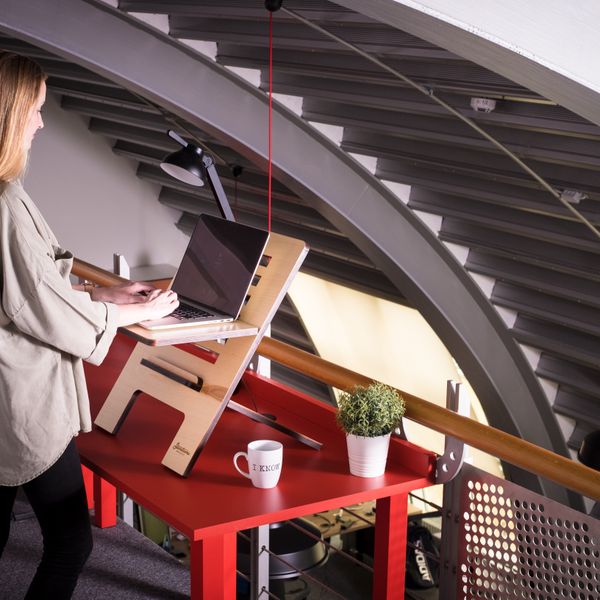
Rise Standing Desk Converter
Sit-stand, two-tier

Wave Ergonomic Keyboard
Curved, cushioned rest

Vertical Wireless Mouse
Slim vertical, quiet clicks
How to read your own week
The headline is not a single statistic but a shape: attendance is spiky, not flat, and it tilts heavily toward home across every tracked European market. Before buying anything, count your own office days over a typical month and note which ones. If the answer is 'mostly home, in twice midweek' — the most common European pattern in 2026 — then the money is best spent making home excellent and the commute frictionless, in that order. We will update the figures above as new tracker data is published.
FAQ
How many days a week do Europeans actually go to the office in 2026?
According to deskbird's 2026 desk-sharing data, average office attendance is about 1.58 days per week in Zurich, 1.56 in Vienna and 1.31 across Germany. The ifo Institute and Stanford's Global Survey of Working Arrangements separately puts German graduates near 1.6 home-working days a week. Both figures mean most knowledge workers spend the majority of their week working from home.
Why is the office busiest on Tuesday and Wednesday?
Midweek days let teams overlap for meetings while keeping Monday and Friday flexible, so hybrid schedules converge on them. In Germany, Tuesday and Wednesday together account for the clear majority of desk bookings, while Friday is the quietest office day. The practical effect is that your two commute days are predictable, which is exactly why a fast dock-and-go home setup pays off.
Should I invest more in my home desk or my office desk?
For the typical European pattern — home most days, office twice midweek — the home desk carries more of your working hours, so it deserves the ergonomic investment first: a stable adjustable desk, a monitor at eye level and a proper chair. Spend on the office side only if your role genuinely keeps you there three or more days a week.
Sources
- deskbird — Hybrid work statistics: What data says in 2026
- ifo Institute — Germans Work From Home More Than Employees in Other Countries (press release, 2025)
- ifo Institute — Global Survey of Working Arrangements (project page)
- The global persistence of work from home — PNAS
- OfficeRnD — 60+ Hybrid Work Statistics for 2026